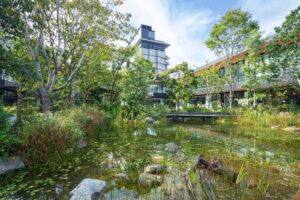
As we enter the second month of 2026, many of you are likely starting to pin down your travel plans for the year. For the eco-conscious travelers, let’s look at which destinations in Southeast Asia are worth visiting based on the Global Sustainable Tourism Council (GSTC) criteria: effective sustainability management, positive socio-economic impacts on local communities, and environmental conservation.
Our focus won’t be on the “grandeur of green” that you can sense through sight or smell, but rather on the local practices that help sustain that greenness for people of all generations.

Brunei: Ulu Temburong National Park
Located in the southern part of the Temburong District, Ulu Temburong National Park is the very first national park in Brunei Darussalam. Visiting the park is quite a journey to remember as reaching the park headquarters requiring visitors to travel through channels in mangrove forests. Known as the ‘Green jewel’, the national park utilizes a strict no-permanent habitation policy within the park, ensuring zero urban encroachment and preserving 50,000 hectares of primary rainforest.
More about this destination, visit https://www.forestry.gov.bn

Cambodia: Chi Phat
Standing right in the skirts of Cardamom mountains, the village of Chi Phat welcomes visitors to kayak, trek, cycle or simply relax while learning about how to be one with the forest. Chi Phat is a world-class model of community-based ecotourism (CBET) thanks to the former loggers and hunters turned forest protectors and local guides who have been playing a significant role in turning a high-deforestation area into a thriving wildlife sanctuary.
More about this destination, visit http://chi-phat.org

Indonesia: Nglanggeran Village
Nestled in the hills of Yogyakarta, Nglanggeran Village is rich of natural beauty and cultural heritage. Winner of the UNWTO “Best Tourism Village”, Nglanggeran Village focuses on geotourism, where the local community manages an ancient volcano site with strict visitor caps to prevent overtourism.
More about this destination, visit https://www.indonesia.travel

Laos: Luang Prabang
A long-standing destination world travelers keep revisiting to recharge, Luang Prabang keeps its status as a UNESCO world heritage site well by balancing tradition preservation with modern way of life. Notable practices; marrying slow travel with high-speed rail connectivity and elevating the community with waste-reduction initiatives.
More about this destination, visit https://www.tourismlaos.org/

Malaysia: Danum Valley
One of the world’s most pristine ecosystems, Danum Valley is Malaysia’s ancient rainforest of over 130 million years. Having 95% of the area covered with forests, the valley limits tourism to a tiny fraction of the conservation area, prioritizing scientific research and high-value, low-impact rainforest education. Truly, it is a wildlife paradise on earth.
More about this destination, visit https://danumvalley.my/

Myanmar: Indawgyi Lake
Indawgyi lake is the third largest inland lake in Southeast Asia and the largest in Myanmar. It is also a UNESCO Biosphere Reserve where the Inthar community practices traditional, low-impact floating agriculture and conservation of migratory bird habitats. It is estimated that over 17,000 migratory waterbirds of 29 species spend winter at this gem of Myanmar.
More about this destination, visit https://www.indawgyilake.com/en

Philippines: Bojo River (Cebu)
Located in Aloguinsan, Cebu, Bojo river is a 1.4 KM-long river known for its stunning natural beauty and rich biodiversity. It is an international award-winner of community-led mangrove preservation thanks to the local cooperative who runs eco-cultural tours where the profits directly fund village education and river cleaning. Visitors can enjoy guided tours on traditional baroto boats, learning about the river’s ecology and explore over 60 species of birds.
More about this destination, visit https://tourism.gov.ph

Singapore: Sentosa Island
A global leader in urban sustainability, Sentosa Island is certified as a GSTC sustainable destination. Aiming for carbon neutrality by 2030 through electric transport and zero-waste dining, the island has more than theme parks but also naturists’ favorites including birdwatching, ziplining through tree tops and night adventure in the rainforest.
More about this destination, visit https://www.visitsingapore.com

Thailand: Koh Mak
This is a small and tranquil island well adored by travelers who seek a peaceful getaway. Koh Mak located in Trat province is Thailand’s first low-carbon destination. The islanders have a collective pact to ban jet skis, limit fossil-fuel vehicles and use solar-powered waste management systems.
More about this destination, visit https://www.tourismthailand.org

Timor-Leste: Atauro Island
Home to the world’s most biodiverse waters, Atauro island’s sustainability is driven by Tara Bandu – a traditional customary law used to manage marine protected areas and prevent overfishing. Having the richest diversity of reef fish and coral species, the island is an incomparable destination for snorkeling and diving.
More about this destination, visit https://www.timorleste.tl

Vietnam: Hoi An
Another UNESCO world heritage site, Hoi An is well-known as one of the best-preserved ancient towns in Southeast Asia. While continuing to celebrate its rich heritage with respect to the natural environment, the city has pioneered plastic-free zones and promotes the cycling-city initiative to reduce carbon emissions within its ancient core.
More about this destination, visit https://vietnamtourism.gov.vn/
What most of these 11 destinations across Southeast Asia have in common are the three consistent hallmarks of excellence. “Community Sovereignty”: moving beyond management by multinational corporations or government officials alone, “Wildlife Rewilding” : letting nature rule including allowing forests to remain truly wild and unembellished so ecosystems can self-regulate, and “Waste Innovation” : going beyond mere waste reduction toward a circular economy that transforms waste into energy or compost.
For those currently planning a trip, we invite you to design a journey that offers ‘more than just sightseeing or relaxation, but an opportunity to live in harmony with nature as it truly is.’ Ultimately, it is nature that provides us with the most sustainable healing, no matter how many times we return to its embrace.
_________________________
SEA of Sustainability brings together stories on environment and sustainability from across Southeast Asia, inspiring collective action toward a more planet-conscious future.
This initiative reinforces the “One Southeast Asia” vision of the SEA CAN Alliance—a collaborative network of agencies dedicated to unlocking regional potential through meaningful and sustainable communication.
Explore more SEA of Sustainability content at: 👉 Sea of Sustainability
Source:
- GSTC Destination Standard
- Winning Stories | Green Destinations Top 100 Story Awards at ITB Berlin 2025
- Supporting Community-Based Management and Sustainable Tourism at World Heritage Sites in Southeast Asia
- Khiri Travel Achieves Group-Wide GSTC Certification in Asia
- Sudamala Resorts Elevates Sustainable Tourism with Solar Power Integration and Coral Reef Restoration Programs
- ASEAN Tourism Awards