“Perovskite” refers to a class of synthetic materials characterized by a crystal structure similar to the naturally occurring mineral calcium titanate (CaTiO_3). First discovered in 1839 in the Ural Mountains of Russia by mineralogist Lev Perovski, this structure has recently become the foundation for a revolutionary era in renewable energy.
In the context of modern energy, the term specifically highlights Perovskite Solar Cells (PSCs). This innovation was pioneered in 2006 by Professor Tsutomu Miyasaka of Toin University of Yokohama. Since its inception, PSC technology has captivated researchers worldwide, emerging as a primary focus for the future of photovoltaics.
Strategic Advantages: Beyond Silicon
PSCs are processed through advanced coating techniques, resulting in a remarkably thin profile of approximately 1 mm. Often described as a “flexible version” of solar cells, PSCs possess structural strengths—being thinner, lighter, and more pliable—than the conventional silicon-based cells that currently dominate the market.
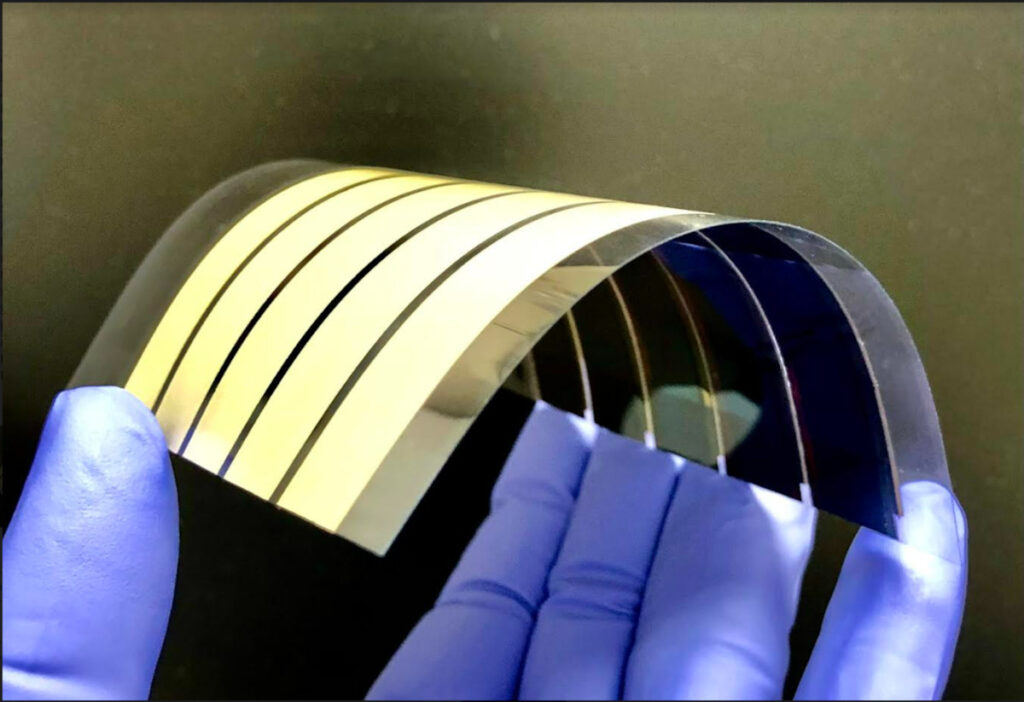
This technology is poised to revolutionize the industry due to its versatility and cost-effectiveness. Key advantages include:
- Versatile Application: PSCs can be applied as a spray coating on glass surfaces, enabling electricity generation from windows and building facades—locations where traditional panels are impractical.
- Low-Light Efficiency: Unlike traditional cells, PSCs maintain high performance even in low-light environments or during overcast conditions.
- Economic Viability: The manufacturing process potentially offers a significantly lower cost of production compared to high-purity silicon.
Current Challenges and Environmental ConsiderationsDespite their potential, PSCs remain in the developmental phase due to several critical constraints. Their primary drawback is a lack of long-term stability; the materials are highly sensitive to moisture, high temperatures, and rapid thermal fluctuations. Consequently, their current peak efficiency is often short-lived.
Furthermore, environmental sustainability remains a point of contention. The standard composition of PSCs often includes lead (Pb), raising concerns regarding toxicity and disposal. A 2022 study indicated that the environmental footprint of PSCs could be up to 7% higher than that of traditional silicon cells, necessitating further research into lead-free alternatives and effective recycling life cycles.
The Thailand Pilot: Testing in Tropical Conditions
Thailand has emerged as a strategic testing ground for PSC efficiency. Recently, Macnica Inc. from Japan, with the support of the Japanese government, partnered with Sena Green Energy to initiate a pilot project.
This collaboration aims to evaluate the performance of next-generation PSCs in Thailand’s unique “Humid Subtropical” climate, characterized by high humidity, intense heat, high UV radiation, and PM 2.5 particulate matter. The ultimate goal is to enhance PSC durability for real-world applications in Southeast Asia, facilitating widespread adoption, reducing greenhouse gas emissions, and driving the global transition toward a sustainable, clean-energy society.
Source:
– Perovskite Solar Cells vs. Silicon: Working Principle & cost
– An Introduction to Perovskites | Perovskite-info
– Miyasaka Group,Toin University of YokohamaAaboutMembers
– Perovskite, Japan’s new solar panel technology, may change the renewable energy market forever.
– Perovskite: TheWonder MaterialThat Could Transform Solar
– New Insights into the Environmental Performance of Perovskite-on-Silicon Tandem Solar Cells – A Life Cycle Assessment of Industrial Manufactured Modules – Sustainable Energy & Fuels (Rsc Publishing)
– https://www.sena.co.th/news-activity/sena-has-been-selected-magnica-funding-japanese-test-perovskite-solar-panel