
For commuters and the urban workforce, traffic congestion is an unavoidable reality that often dictates daily schedules and productivity. Beyond the frustration of long wait times, the traditional traffic management system raises a critical question: how are signal timings determined, and can they be optimized? Prolonged idling at red lights not only disrupts the flow of the city but also contributes significantly to the accumulation of urban air pollution. To address this, Google has introduced Project Green Light, an AI-driven initiative designed to revolutionize traffic management and promote environmental sustainability.
The Evolution of Traffic Control: From Gas Lamps to Digital Logic
The history of traffic management dates back to 1868, when the world’s first traffic signal was installed in London near the Houses of Parliament. Designed by engineer J.P. Knight, the system used gas lamps and was manually operated with red and green signals. However, the project was short-lived; a gas leak led to an explosion in 1869, resulting in the discontinuation of the system due to safety concerns.
It was not until 1914 that the first electric traffic signal system was introduced in Cleveland, Ohio, by James Hoge. In 1920, officer William Potts enhanced the system by introducing the amber (yellow) light to warn drivers of upcoming signal changes—a design that remains the global standard today. London eventually reintroduced electric traffic signals in 1926 at Piccadilly, marking a return to automated urban management after a 60-year hiatus.
Traffic Management in Thailand: A Multi-Agency Effort
In the Bangkok Metropolitan Area, traffic control is a collaborative effort between several key entities:
- The Traffic Police Division (TPD): Responsible for overall traffic enforcement and manual signal overrides during emergencies or peak rush hours.
- The Department of Traffic and Transportation (DTT): Tasked with the installation, maintenance, and programming of signal durations (the red-green intervals).
- The Traffic Control Center: A centralized hub utilizing computer systems to manage and synchronize signals across the city in real-time based on prevailing traffic conditions.
Google’s Green Light: AI-Driven Optimization
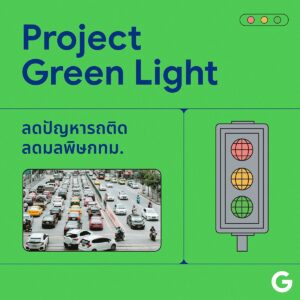
Google’s Green Light project leverages Artificial Intelligence (AI) and Big Data to analyze traffic patterns and optimize signal timings in real-time. By identifying and mitigating the “stop-and-go” cycles that occur at major intersections, the project aims to reduce both travel time and the environmental footprint of urban mobility.
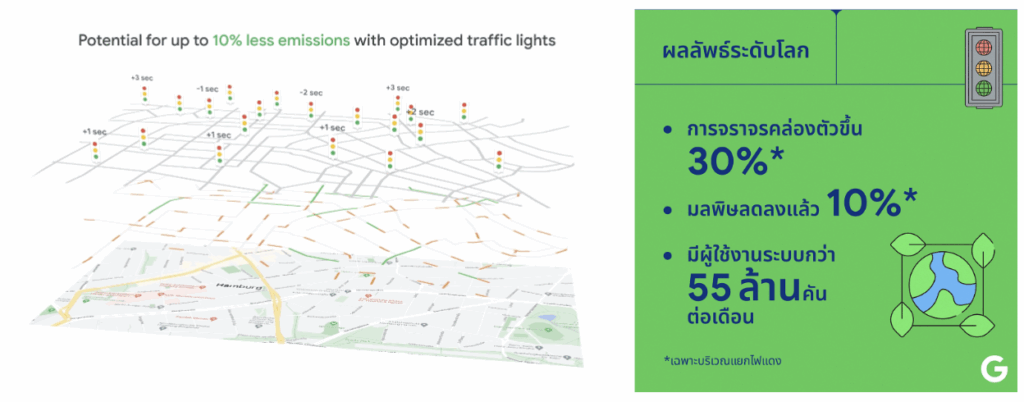
To date, the Green Light project has been implemented in 12 major cities worldwide, including Boston, Hamburg, and Bangalore. Empirical data from these trials indicates impressive results:
- A 30% reduction in stops at red lights.
- A 10% reduction in greenhouse gas emissions at intersections.
- Fuel savings equivalent to over 30 million trips per month.
Implementation in Bangkok: A Strategic Partnership
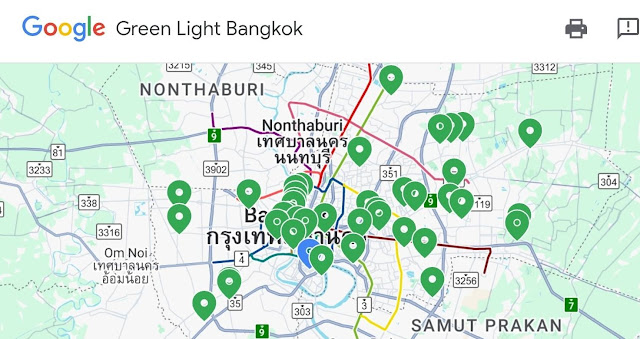
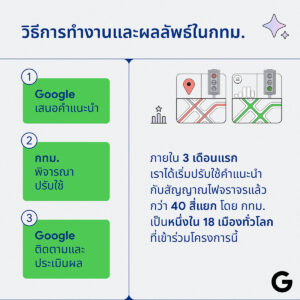
In February 2025, Google partnered with the Bangkok Metropolitan Administration (BMA) to integrate the Green Light project into the city’s major intersections. By utilizing aggregated, anonymized data from Google Maps and driving trends, the system creates predictive models that allow AI to recommend optimal signal timing adjustments. This integration enhances the efficiency of existing infrastructure, ensuring a smoother traffic flow and a significant reduction in vehicle emissions.
Conclusion: A Greener Future for Global Mobility
The ultimate objective of Project Green Light is to scale these environmental benefits globally. As more cities adopt AI-driven traffic management, the collective reduction in greenhouse gas emissions will play a pivotal role in combating climate change. This synergy between technology and urban planning represents a major step forward in creating smarter, cleaner, and more efficient cities for the future.
Source:
- https://sites.research.google/gr/greenlight/
- https://thailand.googleblog.com/2025/05/Project-Green-Light.html
Picture from: https://www.facebook.com/google/